Gandhi Health & Wellness | Boynton Beach, FL
For decades, women moved through one of the most significant hormonal transitions of their lives with inadequate clinical support. Symptoms were minimized. Bloodwork returned within range. And a generation of women were told, directly or indirectly, that fatigue, brain fog, weight gain, and mood instability were simply the cost of getting older.
That narrative is changing, and the science is finally catching up.
A Landmark Regulatory Shift
In November 2025, following a comprehensive review of scientific literature and a formal expert panel convened by the FDA, the U.S. Department of Health and Human Services announced the removal of black box warnings from menopausal hormone replacement therapy products. The updated labeling took effect in February 2026 and applies to all four major categories of HRT: combined estrogen-progesterone therapy, systemic estrogen-alone therapy, systemic progestogen-alone therapy, and topical vaginal estrogen.
It is worth noting that this change does not apply universally to every hormone therapy product on the market. The warning removal covers these specific categories, and a warning for endometrial cancer on systemic estrogen-alone products in women with a uterus remains in place. Not every formulation, dose, or delivery method carries the same regulatory history or risk profile, which is exactly why hormone therapy of any kind should be reviewed individually with a qualified provider rather than treated as a single, uniform category.
The warnings that were removed had been in place since 2003, following a large-scale study whose conclusions were later determined to be significantly misapplied to the broader population of women who could benefit from hormone therapy. For more than two decades, those warnings shaped how clinicians counseled patients and how women perceived their own treatment options, often creating fear where the evidence did not support it.
Importantly, this regulatory update was not made lightly. It followed a thorough scientific review, a public comment period, and formal labeling submissions from 29 drug manufacturers. It represents a meaningful course correction in women’s health policy, one that acknowledges how many women were denied access to effective care based on guidance that did not accurately reflect the available evidence.
FDA Commissioner Marty Makary publicly noted that menopausal symptoms can significantly diminish quality of life for years, and that the proportion of women currently receiving hormone therapy remains far lower than the population who could benefit from it. The clinical community hopes this shift will begin to close that gap.
At Gandhi Health & Wellness, this is a conversation we have been having with our patients for years. What we want every woman reading this to understand is straightforward: what you are feeling is real, it is clinically addressable, and you deserve a care team that approaches your symptoms with the seriousness they warrant.
What Perimenopause Actually Looks Like
Perimenopause can begin as early as the mid-to-late thirties, well before most women expect it, and it rarely presents in the textbook way. The absence of classic symptoms like hot flashes does not mean the transition is not underway. This is one of the primary reasons so many women are misdiagnosed or simply told their results are normal when they know something has shifted.
The symptom picture is broad and frequently overlaps with other conditions, making clinical clarity difficult without comprehensive evaluation. Common presentations include:
- Persistent fatigue and disrupted or unrestorative sleep
- Cognitive difficulty, brain fog, and reduced mental clarity
- Mood instability, heightened anxiety, and emotional dysregulation
- Unexplained weight gain, particularly in the abdominal region
- Changes in menstrual cycle pattern, frequency, or flow
- Reduced libido and changes in sexual health and comfort
- Hair thinning, changes in skin integrity, and nail changes
- Joint discomfort, reduced physical resilience, and slower recovery
What makes perimenopause particularly challenging to diagnose in a standard clinical setting is the degree to which its symptoms overlap with thyroid dysfunction, adrenal dysregulation, and metabolic changes. These conditions frequently occur alongside hormonal transition and amplify one another. A conventional approach that treats each symptom separately often produces incomplete results. A root-cause approach examines the whole system together.
Why Standard Lab Work Often Falls Short
Among the most common frustrations we hear from new patients is this: their lab results came back normal, yet they feel anything but. This is not a reflection of poor laboratory work. It is a reflection of how conventional reference ranges are established, which is across a broad population, not calibrated to what is optimal for an individual woman at a specific point in her hormonal life.
At Gandhi Health & Wellness, our diagnostic process goes considerably deeper. We evaluate estrogen, progesterone, testosterone, DHEA, cortisol, thyroid markers, and key inflammatory indicators as an integrated picture. The goal is not simply to determine whether a value is within range. It is to determine whether it is optimal for you, given your symptoms, your health history, and your goals.
A Root-Cause Approach to Hormonal Transition
The clinical objective at Gandhi Health & Wellness is to identify what is driving your symptoms and build a protocol that addresses those drivers directly. Treatment is never one-size-fits-all, and it is never approached without a thorough understanding of your individual presentation.
Depending on your health history, lab findings, and goals, a personalized protocol may incorporate:
- Bioidentical hormone replacement therapy (BHRT) calibrated to your specific lab values and symptom profile
- Peptide therapy to support cellular repair, energy production, and metabolic function
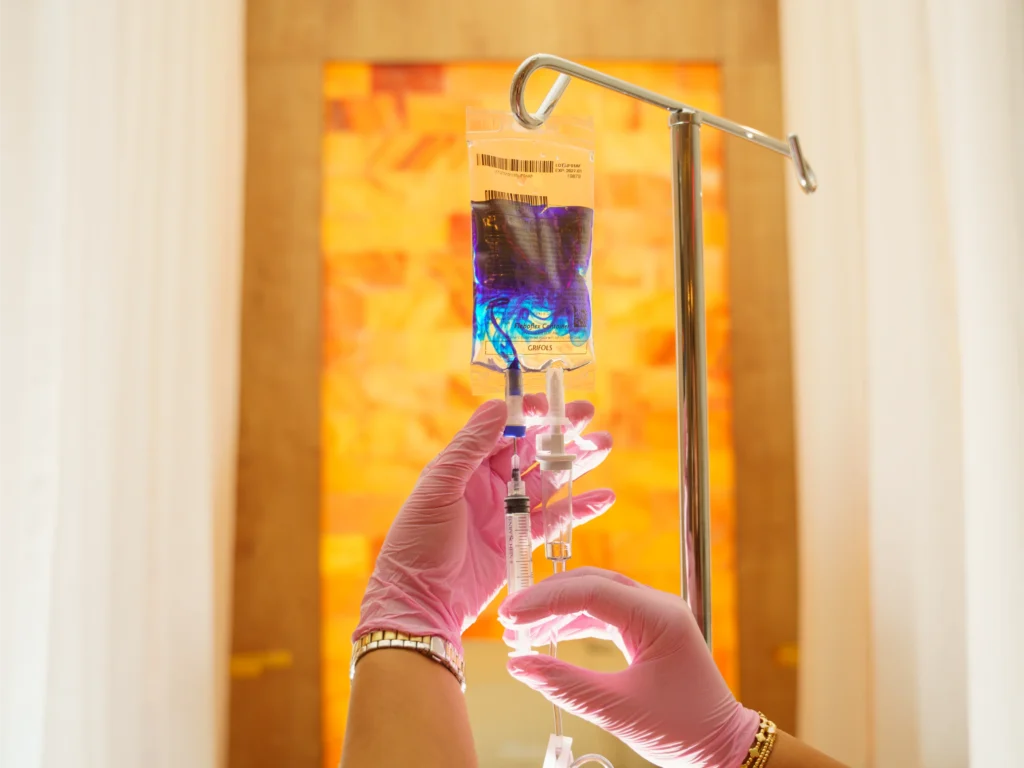
- IV nutrient therapy to address micronutrient deficiencies that commonly intensify hormonal symptoms
- Gut and metabolic support, given the established relationship between gut health, inflammation, and hormone metabolism
- Mental and emotional wellness support, recognizing that hormonal transitions have measurable effects on neurological function and mood
- Personalized nutrition and lifestyle guidance grounded in your individual biology
At Gandhi Health & Wellness, our focus is specifically on bioidentical hormone replacement therapy, which uses hormones structurally identical to those the body naturally produces. BHRT is not approved or appropriate for every woman, and whether it is the right option depends on your individual health history, current labs, and symptom profile. This is precisely why every protocol begins with a comprehensive consultation rather than a standard prescription. We review your complete health history, assess your current symptoms in context, and determine together whether hormone therapy, and which form of it, makes sense as part of your broader care strategy.
The Conversation Has Changed. Your Care Should Reflect That.
For too long, the clinical conversation around perimenopause and hormone therapy was shaped more by outdated caution than by current evidence. The FDA’s 2026 regulatory update is a formal acknowledgment that the science has evolved and that women deserve clinical guidance that reflects it accurately. At the same time, hormone therapy is not a one-size-fits-all solution, and the right next step is a personal conversation with your provider about whether it is right for you.
If you have been living with symptoms that feel unexplained, if previous providers have told you your labs are normal when you know something is not right, or if you are ready to approach your hormonal health proactively before symptoms progress, Gandhi Health & Wellness is here to help.
Consultations are open for women ready to take a root-cause, expert-guided approach to perimenopause and hormonal health. Dr. Gandhi and her team will walk you through a comprehensive evaluation, help you understand what is actually happening in your body, and build a plan designed specifically around you.
About the author
Dr. Kunal P. Gandhi, MD, is a board-certified primary care physician with over a decade of experience in family and functional medicine, and a recognized leader in functional medicine. As the founder of Gandhi Health & Wellness in Palm Beach County, Dr. Gandhi provides personalized, patient-centered care for individuals of all ages, from six months and up.
She is known for addressing the root causes of illness rather than just managing symptoms. By integrating advanced diagnostic testing with functional and integrative therapies, Dr. Gandhi designs tailored care plans that empower patients to achieve sustainable wellness, resilience, and vitality.
Disclaimer
This article is intended for educational and informational purposes only and does not constitute medical advice, diagnosis, or treatment. Individual health concerns, treatment plans, and therapies should always be discussed with a qualified healthcare provider. Results may vary from person to person.