A Growing Multistate Outbreak
Over the past several weeks, health agencies across the country have been tracking a significant rise in cyclosporiasis cases. The CDC is currently investigating a multistate outbreak tied to contaminated iceberg lettuce, with confirmed cases now reported in more than two dozen states and case counts still climbing. Michigan and Ohio have reported especially high numbers, and thousands of additional suspected cases are under review.
Cyclosporiasis is caused by Cyclospora cayetanensis, a microscopic parasite that spreads through contaminated food or water. It only takes a small number of these organisms to cause infection, which is part of why outbreaks like this one can spread so widely before the source is identified. Past outbreaks have been linked to bagged salad mixes, cilantro, basil, raspberries, and green onions, and this season’s cases have centered on lettuce distributed to restaurants and retailers.
Symptoms typically begin one to two weeks after exposure and include watery diarrhea, cramping, bloating, nausea, fatigue, and loss of appetite. Left untreated, the infection can linger for weeks or even months, and it often causes cycles of feeling better followed by relapse. Even after the acute infection clears, many patients are left with a gut that needs real support to fully recover.
Why This Matters Beyond the Immediate Illness
Patients often ask us why a gastrointestinal infection from months ago still seems to be affecting their energy, digestion, and overall well-being. The answer usually comes down to what the infection did to the gut environment while it was active.
A parasitic infection like Cyclospora can disrupt the intestinal lining, alter the balance of the gut microbiome, and trigger inflammation that persists after the organism itself has been cleared.
This can lead to:
- Ongoing bloating, gas, or irregular bowel habits
- New food sensitivities that were not present before
- Fatigue and brain fog related to nutrient malabsorption
- A weakened gut barrier, sometimes referred to as leaky gut
- Increased vulnerability to future infections
This is one of the reasons we encourage patients recovering from any gastrointestinal illness, including cyclosporiasis, to look beyond symptom resolution and address what is happening at the level of the gut itself.
How Gandhi Health & Wellness Approaches Gut Recovery
At Gandhi Health & Wellness, we treat the gut as a foundational system that influences metabolism, immunity, mood, and long-term health. Our approach to supporting patients affected by this outbreak, or any gastrointestinal illness, includes:
Comprehensive Stool and Microbiome Testing Advanced testing can identify lingering parasites, bacterial imbalances, and markers of inflammation that standard labs often miss. This gives us a clear picture of what your gut needs to fully heal.
Targeted Treatment for Dysbiosis and Overgrowth When testing reveals imbalances such as SIBO, candida overgrowth, or persistent dysbiosis following an infection, we design a treatment protocol specific to your results rather than a one-size-fits-all cleanse.
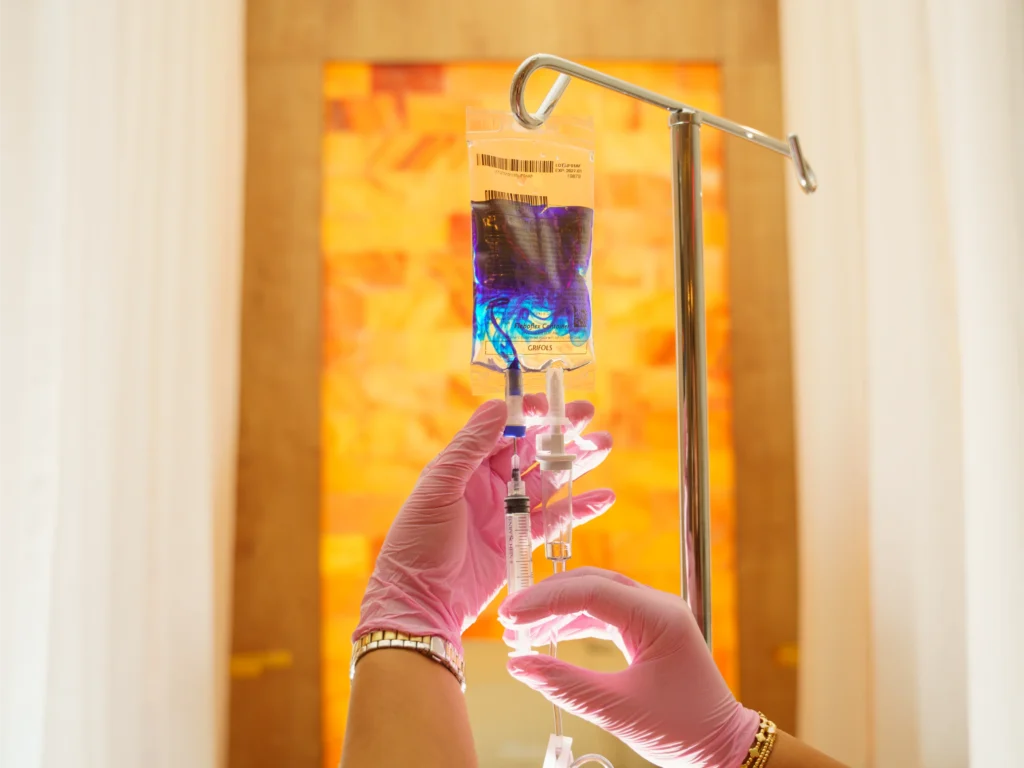
IV Therapy for Rehydration and Recovery Cyclosporiasis frequently causes significant fluid and nutrient loss through prolonged diarrhea. Our IV therapies, including our Immune IV and Myers’ Cocktail, deliver fluids, electrolytes, and key nutrients directly into the bloodstream to help patients rehydrate and recover more efficiently than oral intake alone.
Nutrition and Gut-Repair Protocols Once the acute infection has resolved, we work with patients on nutrition frameworks and targeted supplementation designed to rebuild the intestinal lining, restore healthy bacteria, and reduce residual inflammation. This is also an area where emerging research on natural compounds like nano-curcumin is worth watching.
An Emerging Area of Research: Nano-Curcumin
A recent peer-reviewed animal study offers an interesting look at how nano-curcumin, a specially formulated version of the curcumin compound found in turmeric, compared to standard antibiotic treatment for Cyclospora infection. In the study, mice infected with Cyclospora cayetanensis were treated with either the standard antibiotic trimethoprim-sulfamethoxazole (commonly known as Bactrim), regular curcumin, or nano-curcumin over seven days.
By day 30, stool oocyst counts, a measure of how much parasite the animals were still shedding, dropped from 1.07 in untreated mice to 0.22 in the Bactrim group and just 0.03 in the nano-curcumin group. That reflects a roughly 97 percent reduction from baseline with nano-curcumin, a notably higher percentage than what the antibiotic achieved. Imaging also showed that nano-curcumin caused visible structural damage to the parasite itself. Perhaps most notably, the nano-curcumin group showed no detectable parasites in intestinal tissue and no relapse after treatment stopped, while some rebound infection occurred in the antibiotic group.
It is important to view these findings in context. This was a mouse study, not a clinical trial in humans, and the researchers noted that the differences between nano-curcumin, regular curcumin, and Bactrim did not reach statistical significance. That means the results are promising rather than conclusive, and nano-curcumin should not be viewed as a replacement for prescribed antibiotic treatment when cyclosporiasis is confirmed. What the study does offer is an encouraging early signal that natural compounds may have a future role in supporting recovery from parasitic gut infections, alongside conventional care.
At Gandhi Health & Wellness, we recommend physician-grade supplements, including curcumin formulations, based on individual lab findings and symptoms rather than trends. Through our Fullscript dispensary, we offer Liposomal Curcumin, a highly bioavailable formula designed to be absorbed far more efficiently than standard curcumin extracts. This formulation is intended to support balanced immune function and help maintain a healthy intestinal barrier, both of which matter during gut recovery.
For patients whose testing reveals ongoing toxin exposure or a gut environment still working to clear irritants after an infection, we may also recommend MycoPul, a broad-spectrum binder that helps capture and remove mycotoxins and other environmental toxins from the GI tract. Binders like this are sometimes used alongside gut-repair protocols to support the body’s natural elimination pathways during recovery.
If you are curious whether either of these supplements fits into your recovery plan, our clinical team can walk you through the current evidence and help you make an informed decision.
Ongoing Monitoring We recheck labs and symptoms at appropriate intervals to confirm that the gut has truly recovered, not just that the original infection has cleared.
Protecting Yourself During Cyclosporiasis Season
The CDC considers May through August the peak season for cyclosporiasis in the United States, so continued caution with fresh produce is warranted for the next several weeks. A few practical steps can lower your risk:
- Wash all fruits and vegetables thoroughly before eating, even if they are labeled pre-washed
- Stay informed about active recalls, including the current iceberg lettuce recall from Taylor Farms de Mexico
- Cook produce when possible, since heat destroys the parasite
- Avoid untreated water from lakes, streams, or wells
- Practice thorough handwashing, particularly around food preparation
Some patients also add an extra layer of produce sanitation at home. The TheraO3 Ozone Bubbler infuses water with ozone and is designed to help reduce bacteria, parasites, and pathogens on fruits and vegetables before they are eaten. It is not a substitute for the food safety steps above, but for households looking to be extra cautious during peak cyclosporiasis season, it can be a useful addition to a produce-washing routine.
If you have experienced persistent diarrhea, cramping, or unexplained fatigue in recent weeks, particularly after eating at a restaurant or purchasing bagged salad or lettuce, it is worth having it evaluated rather than waiting for symptoms to resolve on their own.
About the author
Dr. Kunal P. Gandhi, MD, is a board-certified primary care physician with over a decade of experience in family and functional medicine, and a recognized leader in functional medicine. As the founder of Gandhi Health & Wellness in Palm Beach County, Dr. Gandhi provides personalized, patient-centered care for individuals of all ages, from six months and up.
She is known for addressing the root causes of illness rather than just managing symptoms. By integrating advanced diagnostic testing with functional and integrative therapies, Dr. Gandhi designs tailored care plans that empower patients to achieve sustainable wellness, resilience, and vitality.
Disclaimer
This article is intended for educational and informational purposes only and does not constitute medical advice, diagnosis, or treatment. Individual health concerns, treatment plans, and therapies should always be discussed with a qualified healthcare provider. Results may vary from person to person.